

Blackgrove Intelligence Network

Exclusive Events
UNCONTROLLED SKIES: The Unattributed, Under-Reported, Unresolved Gap Over American Airspace
Latest Insights Public












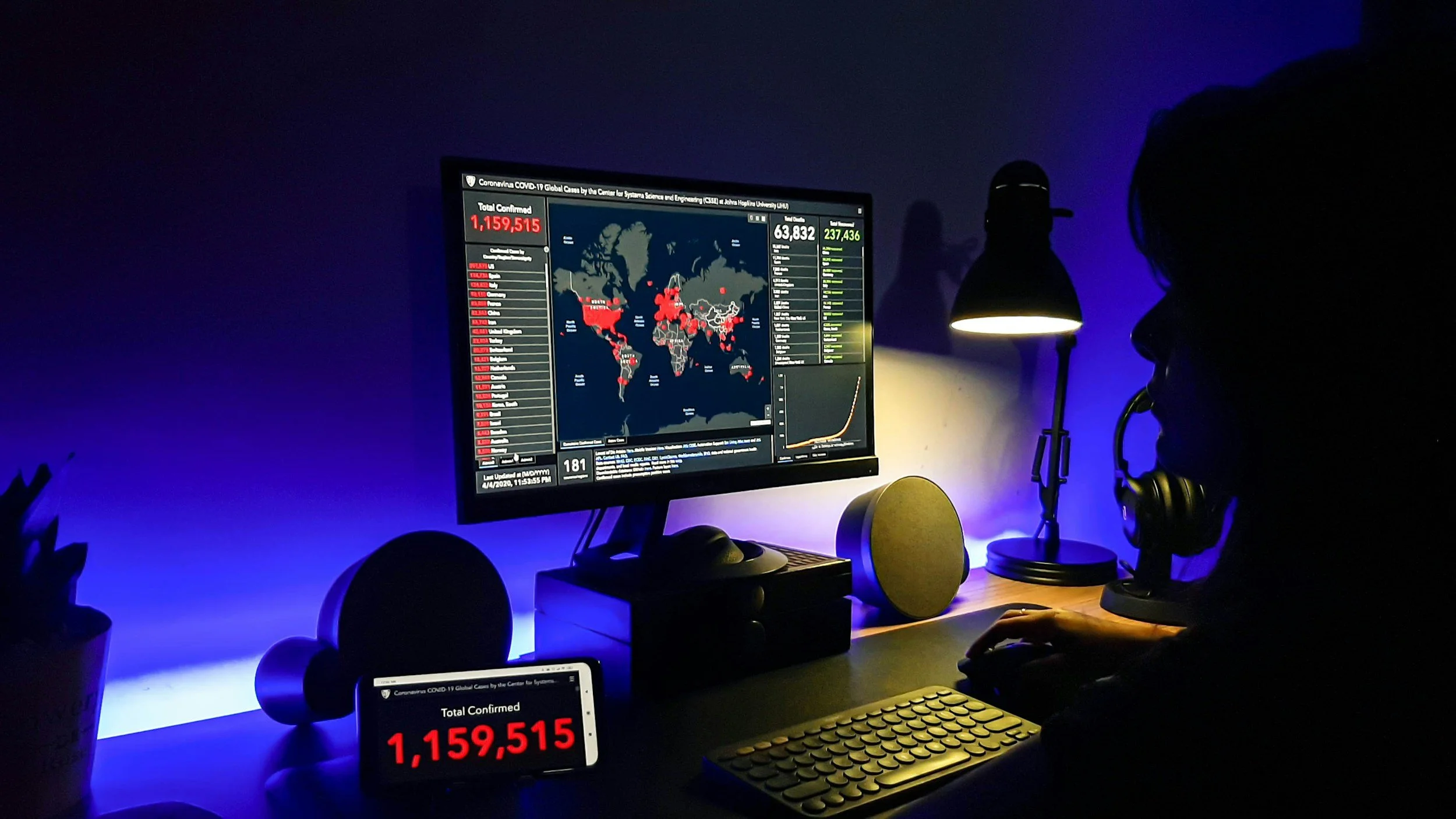


Unattributed Airspace Exposure (UAX) is a distinct enterprise risk category an organization faces when objects operate in or near its airspace without a responsible operator being identified within an actionable timeframe. This term fills a critical gap in commercial risk practice where no corresponding classification currently exists, despite significant legislative and defense activity addressing the issue. It is origin-agnostic, focusing on the consequence of attribution failure rather than the nature of the object itself.
The reconstruction is competent and its conclusion is not carried by it. One quantity was measured; every quantity a reader cares about is conditional on a target range the released file does not contain.
The documents cover UAP-related contractor non-compliance, rare earth supply chain fractures, and PJM grid instability. They highlight that voluntary disclosure efforts lack enforcement, while geopolitical tensions and internal litigation impact critical materials. Furthermore, the sources include risk assessments for the intelligence governance gap and advanced energy technologies, noting that no integrated systems have yet achieved net-energy production or peer-reviewed exotic propulsion.
Documents how U.S. government classification, contracting, and appropriations systems create a secrecy economy. These institutions, functioning as a rational "moat," manage unresolved categories while shielding information from oversight. Blackgrove prices this systemic silence, arguing the documented incentive architecture—not anomalous content—fully explains the observed institutional behavior.
The documents analyze contractor exposure to UAP policy, finding it primarily procedural rather than existential. Current disclosure instruments are mostly voluntary or unenacted and fail to reach corporate non-disclosure agreements. Companies face minimal UAP-specific risks but significant potential impacts from ordinary commercial and securities litigation. Boards are advised to document search methodologies and compliance processes to mitigate future production demands.
The Disclosure Ledger examines economic and regulatory implications of unidentified anomalous phenomena (UAP), separating narrative and sovereign economies and showing how markets price disclosure. Drawing on congressional briefings, whistleblower testimony, fund performance (Tuttle Capital UFO Disclosure ETF, Blackgrove Fund hypotheticals) and material-vs-narrative supply chains, it maps custody, reverse‑engineering and funding flows. Includes 16 monitoring indicators, a deliverables register, and practical guidance for executives, boards, risk managers and analysts to assess disclosure risk, accountability and market behavior without speculating on the phenomenon itself.
UAP is no longer a reputational curiosity for the aerospace and defense sector. Since FY2022, Congress has enacted statutory provisions that directly target defense contractor activities which create compliance, disclosure, and valuation risks that exist independently of whether any contractor actually possesses anomalous material. The legislative architecture is the exposure. This primer maps that architecture for professionals encountering UAP as a business variable for the first time.
"The legacy program" is shorthand for a claim that has reshaped U.S. defense policy over the past four years: that the United States government, operating through defense contractors and highly compartmented special access programs, has for decades been recovering, storing, and attempting to reverse-engineer material of non-human origin. For Blackgrove's readers, the question is not whether alien technology sits in a vault. The question is what the institutional response to that claim means for defense governance, contractor compliance, and the integrity of classified program oversight.
The current institutional acceleration did not begin in February 2026 with a presidential directive. It did not begin in December 2017 with a New York Times article. It began in 1947 when the U.S. Air Force concluded that unidentified objects in American airspace were real, physical, and unidentifiable — then spent the next seventy-eight years building, dismantling, and rebuilding institutional capacity to deal with that conclusion. What we are watching now is the fourth institutional cycle. The first three were suppressed. This one has not been — yet.
A substantial, multi-layered evidence chain exists — composed of sworn congressional testimony, bipartisan legislative action premised on the existence of retrieval programs, an Intelligence Community Inspector General determination, declassified government documents spanning seven decades, and on-record statements by senior military and intelligence officials — that is consistent with the hypothesis that the U.S. government has recovered materials of unknown origin and conducted reverse-engineering efforts on them. This assessment maps the evidence at its earned tier without rendering a final verdict. The evidence chain is real. What it ultimately proves remains an open question.
All profiles are living assets. Reliability reads are provisional and subject-specific, revised in the open as track records extend, as PURSUE produces records, and as claims are corroborated or fail to be. The named-individual bar applies with full force: assess the function of information, not the witting involvement of a person.
The documented record of unattributed incursions over nuclear and sensitive sites makes this an operational-continuity and force-protection problem today, whatever the origin proves to be. The piece tiers the evidence carefully, then turns to the legal-authority gap that constrains downing drones over domestic facilities and the continuity planning a multi-day airspace degradation demands.
Fixed assets near incursion-prone installations carry a new and unpriced location risk that runs straight into insurability and valuation. The piece works the data-center and logistics-siting case near military airspace, the silent-exposure problem applied to immovable assets, and the lending and valuation implications that the Langley-adjacent precedent now makes concrete.
Satellite proliferation and the maturation of space-based sensing make detection, not belief, the live question, and the detection gap is itself a telecom-and-space exposure. The piece works the tension between an increasingly crowded environment, the sensing capacity to characterize what moves through it, and the commercial space sector's role in any future evidence base.
The binding constraint is airspace deconfliction and a pilot-reporting culture long suppressed by stigma. Disclosure changes the reporting environment before it changes anything else, and the change shows up first in incident data.
Deep uncertainty rewards cheap optionality, and a speculative "UAP-tech" cycle is a live possibility worth underwriting against. We argue the discipline is to buy convexity without buying a metaphysics, and to distinguish a real materials-or-sensing thesis from narrative froth.
The transmission mechanism is a credibility cascade. Official validation, or a corroborated whistleblower revelation, reprices correlated baskets faster than fundamentals justify, and the move is indifferent to whether the phenomenon is exotic.
Over a sensitive facility, no one can reliably say what is in the airspace, who put it there, or what to do about it, and a cheap commercial drone is enough to exploit the gap. That gap is live now, it carries a documented attack precedent, and by default it sits with the site owner.
The defensible national-security reading is a technological-surprise problem, and the reverse-engineering and metamaterials claims, whatever their truth, create a speculative and due-diligence problem for advanced-materials and chip valuations. The piece carries the "intelligence failure eclipsing 9/11" framing at its testimonial tier.
The U.S. government has a documented history of using "UFO" as a convenient explanation for classified technology — allowing witnesses to misidentify advanced programs rather than correcting the record. The analytic question is whether all UAP evidence can be explained this way, or whether a residual signal survives every conventional filter. We construct six diagnostic tests to separate signal from cover. Applied to the evidence chain, five of six tests return results inconsistent with the cover-story-only hypothesis. The sixth is inconclusive.